How Subtitles and Translations Help You Practice English Speaking
Many English learners avoid speaking practice because they are afraid they will not understand the other person.This fear is normal.
In real conversations, people speak at different speeds. They have different accents. They use words you may not expect. Sometimes you understand the topic, but miss one sentence and suddenly feel lost.
That is where subtitles and translations can help.
They make English speaking practice easier to follow, less stressful, and more comfortable, especially when you are talking with real people from different countries.
Why understanding is a big part of speaking
Speaking practice is not only about talking.
It is also about listening. To join a conversation, you need to understand what others are saying. Then you need to respond. If you miss too much, you may stop speaking completely.
You may think:
“What did they say?”
“What should I answer?”
“What if I reply incorrectly?”
“What if everyone notices I did not understand?”
This can make speaking practice feel stressful. Subtitles and translations reduce this pressure.
Live subtitles help you follow the conversation
Live subtitles show spoken English as text during a conversation.
This is helpful because you can hear the sentence and read it at the same time.
If someone speaks quickly, you can still follow the meaning. If you miss a word, you can look at the subtitle and stay connected to the conversation.
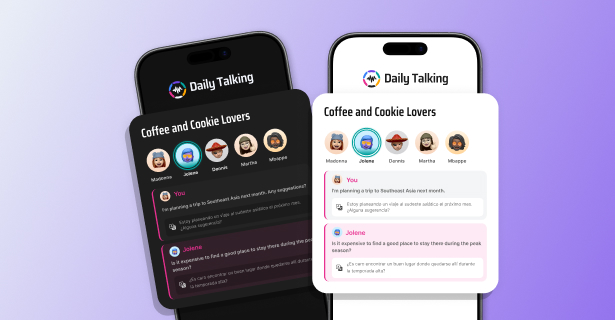
Daily Talking includes real-time subtitles during live voice sessions, so learners can follow along while practicing English. Users can also turn subtitles on when they need them and off when they do not.
This gives learners more control during speaking practice.
Translations help when English subtitles are not enough
Sometimes you can read the English subtitle but still not fully understand the meaning.
Maybe the sentence has a new phrase. Maybe the speaker uses an expression you do not know. Maybe you understand each word separately, but not the full idea.
Translations help in these moments.
Daily Talking lets learners see subtitles translated into their native language during sessions. This can make it easier to understand the conversation and stay involved. This does not mean you should rely on translations forever.
But they can support you while you build confidence.
They reduce the fear of getting lost
One of the biggest reasons learners avoid speaking is fear.
Fear of not understanding.
Fear of answering wrong.
Fear of freezing.
Fear of silence.
Subtitles and translations make the conversation feel safer. You know that if you miss something, you have support. This helps you relax and focus more on the conversation.
And when you feel less stressed, you are more likely to speak.
They help you learn spoken English naturally
Subtitles are also useful for learning. When you hear a sentence and see it written, your brain connects spoken English with written English.
You notice:
- How words sound in real speech
- Which phrases people use often
- How questions are formed
- How people react naturally
- Which words are useful in daily conversation
This can improve both listening and speaking over time.
They are especially useful with different accents
Real English does not sound the same everywhere.
People from different countries have different accents and speaking styles. This is part of real communication. At first, different accents can feel difficult. But with subtitles, you can practice understanding them without feeling completely lost.
Daily Talking focuses on real conversations with people from different countries, which helps learners experience different accents and spontaneous conversations.
Subtitles and translations make that experience easier and more comfortable.
They help beginners join real conversations earlier
Many learners wait too long before speaking.
They think:
“I will start speaking when I understand everything.”
But you do not need to understand everything to begin. With subtitles and translations, you can join conversations earlier. You can listen, follow the meaning, and speak when you are ready.
This is important because speaking confidence comes from real practice, not from waiting.
How Daily Talking uses subtitles and translations
Daily Talking is designed to make English speaking practice less stressful.
During small group voice sessions, learners can use live subtitles and translations to follow the conversation more easily.
This is useful when:
- Someone speaks quickly
- You miss a word
- You do not understand an accent
- You need extra support
- You want to stay involved in the group
You can practice with real people, but still have support when you need it.
Final thought
Subtitles and translations do not replace speaking practice. They make speaking practice easier to start and easier to continue. They help you understand more, feel less nervous, and stay involved in real conversations. With Daily Talking, you can practice English with real people in small groups while using subtitles and translations as support.
So you do not have to wait until your English is perfect.
You can start speaking, follow the conversation, and improve step by step.